
October 1, 2025
Instructor Resources & Career
If you're considering becoming a Zumba® Instructor, you already know that leading a fitness class is about more than choreography. It's about connection and keeping your students moving together in an effortless rhythm. But for many new instructors, cueing is one of the biggest challenges.
Cueing can feel intimidating at first. You may worry about giving signals too late, fumbling with gestures, or leaving your class unsure of what's next. That's where learning effective tips to master group cueing can transform your teaching. With practice and the right techniques, you can gain confidence and bring your students the joyful and seamless experience they expect from a Zumba® class.
What Is Cueing?
Cueing is how you let your class know what's coming next. Think of cueing as the language of teaching. When done right, it helps your students feel safe, confident, and fully engaged. Without cues, students can feel frustrated or confused. Knowing how to cue effectively is one of the most essential skills you'll need to develop as a fitness instructor.
There are two primary types of cues:
· Verbal cues: Spoken instructions like "step left," "arms up," or "one more time."
· Nonverbal cues: Gestures, claps, facial expressions, or hand signals that fit naturally into the music.
Both styles are important, but in Zumba® classes, nonverbal cues can be very powerful because they help students stay fully immersed in the music without constant interruptions.
Why Cueing Fitness Class Students Matters
Cueing goes beyond choreography and is part of the entire experience you create for your students. Cueing correctly matters because it:
· Helps prevent injuries: Students who know what's coming can adjust their bodies quickly, avoiding rushed or awkward movements.
· Boosts students' confidence: When students feel like they can follow along, it helps boost their confidence.
· Creates a sense of unity: Cueing brings the whole class together, turning individual efforts into a shared experience.
Common Challenges of Fitness Instructor Cueing
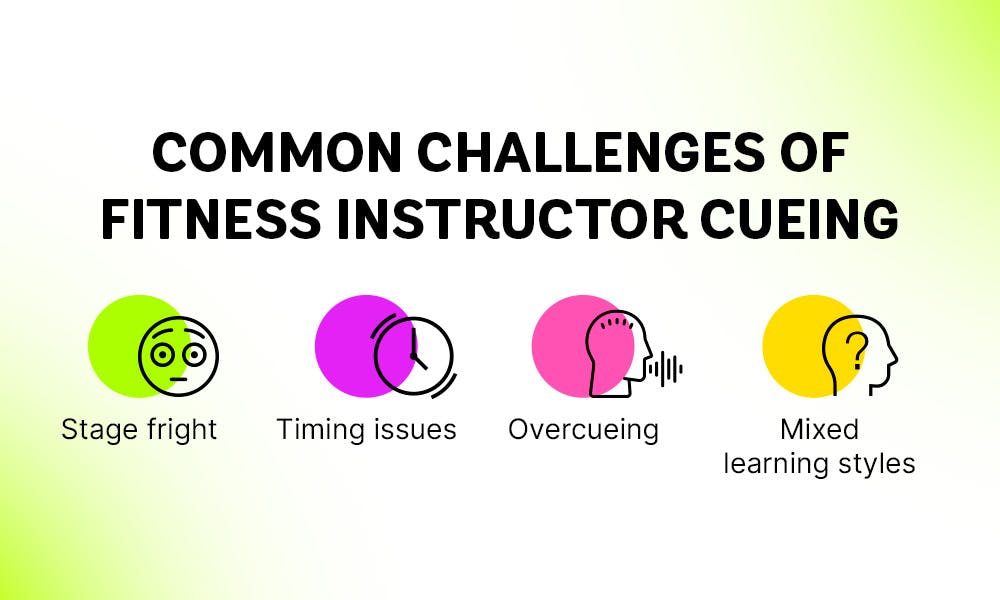
If you're struggling with cueing, you might be facing one or more of these common challenges:
· Stage fright: Nerves can make it hard to project confidence, especially when you're just starting out.
· Timing issues: Giving cues too late leaves students scrambling, while giving them too early can cause confusion.
· Overcueing: Talking too much can overwhelm students and distract from the experience.
· Mixed learning styles: Some students grasp visual cues instantly, while others need verbal reinforcement. Managing both at once takes practice.
These challenges are real, but they can also be temporary. With patience and consistent effort, cueing will become second nature.
How to Cue a Group
As a fitness instructor, cueing is a skill you can sharpen with practice. These are a few proven techniques that may help:
1. Use Clear and Consistent Signals
Your students need to know what your cues mean, and you can achieve this through consistency. Whether it's a hand gesture or a head nod, keep your signals consistent from song to song. For example, if you use a circular hand motion to indicate a turn, use it every time. This minimizes confusion and helps students feel secure in your lead.
2. Prepare Cue Points Before Class
Cueing doesn't start when the music plays. It begins with your preparation. Listen to your playlist ahead of time, identify transitions, and decide when to cue each movement. Some instructors jot quick notes about cue points, while others rehearse until the signals become muscle memory. Whichever you choose, a little planning can make a huge difference in your cueing capabilities for every class.
3. Engage With Your Class
Cueing is about connection. Make eye contact with your students, smile, and watch their responses. If students seem hesitant, reinforce the cue with a gesture or repeat it verbally. Engaging with your class makes the experience more personal and supportive.
Don't be afraid to ask students for feedback directly, whether that's having a quick check-in after class or by sending them home with surveys or questionnaires to bring with them next time. These insights can help bridge the gap between your observations and students' personal reflections or concerns.
4. Match Cues to the Beat
When music is involved, timing matters. Giving cues just before the beat helps your class flow into the next move without missing a step. For example, clapping before a change in direction can help signal the shift and enhance the room's energy.
If you're unsure how to cue a challenging song, reach out to fellow Zumba® Instructors or seek community support through the Zumba® Instructor Network.
5. Adapt to Student Learning Styles
Not every student learns the same way. Some pick up visual cues instantly, while others respond better to verbal directions. Mixing verbal and nonverbal signals ensures everyone feels included. For example, you might point left while also saying "left side" to catch both visual and auditory learners.
6. Practice and Record Yourself
Just like athletes watch game footage, instructors can benefit from reviewing their own classes. Record yourself teaching, then watch how your cues align with the music and student reactions. This honest assessment can help you refine timing, energy, and consistency.
Building Confidence as a Zumba® Instructor
Confidence doesn't appear overnight, but grows with every class you teach. When you cue effectively, your students follow smoothly — and that instant feedback reinforces your own confidence. You can build on that momentum in a few key ways:
· Trust your training: Zumba® Instructor training sessions are designed to give you all the tools you need to succeed, including reliable cueing techniques.
· Start small: Practice in front of a mirror, record yourself, or teach a few friends before leading a full class. These small wins can help reduce nerves over time.
· Focus on connection: Your students want you to be present, encouraging, and engaged. When you connect with them, your confidence may naturally grow.
Ready to Become a Zumba® Instructor?
Cueing may feel like a hurdle right now, but it’s also the very skill that can help you grow into the confident instructor you want to be. At Zumba®, we know that every instructor faces challenges in timing, clarity, and connection, and we believe you already have what it takes to overcome them. That’s why our Zumba® Instructor training is designed to give you practical tools, supportive guidance, and the confidence to lead classes that flow with energy and joy.
With a Zumba® Instructor License, you'll gain the training and support you need to take your cueing to the next level. Register to become a Zumba® Instructor today to get started.