October 8
Instructor Resources & Career
The treadmill in the corner of your bedroom has turned into an expensive coat rack, and every solo workout app you've tried fizzles out by week three, mostly because going it alone makes it easy to hit snooze, skip a day, then a week.
Now picture a different scene: a room full of people moving together, music pumping, an instructor cueing everyone through the same routine while energy bounces off the walls. You simply show up and let the group carry you forward. That's the world of group fitness, and it's bigger and more varied than many realize.
Group Fitness Basics
Group fitness is any instructor-led exercise session held in a shared setting, in person or online, where two or more people follow the same format together.
Unlike solo exercise, an instructor sets the pace and structure. You can walk in and follow along instead of building a workout plan yourself. Having other people around and an instructor cueing you naturally raises your effort and energy compared to working out alone. A class starting at a set time also builds in accountability that helps the habit stick. Blocked out on your calendar, it's easier to show up for than a workout you planned in your head.
That structure is just the starting point. Group fitness has a range of formats, from dance and cycling to yoga and strength training. There's a version suited to every personality and goal.
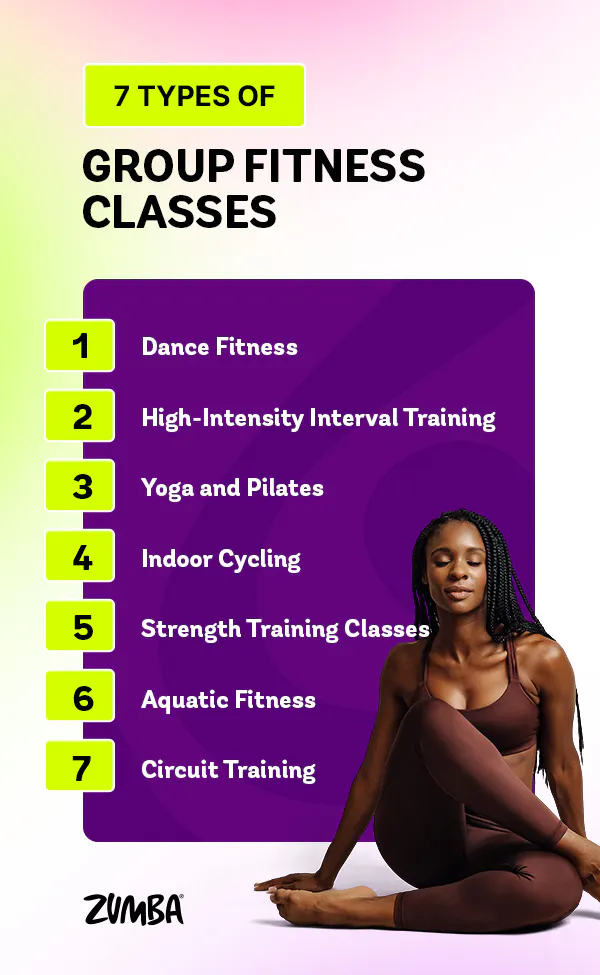
7 Types of Group Fitness Classes
Most people picture a single style of aerobics class when they hear the phrase group fitness, but the category covers far more ground than that.
1. Dance Fitness
Dance fitness classes blend choreographed movement with cardio. Set to music, the experience feels closer to a dance party than a conventional workout as you move, sweat, and burn calories almost without noticing.
This format suits:
· Music lovers
· People who want cardio without the grind
· Beginners looking for a welcoming, high-energy way to start
Zumba® is one of the most recognizable names in this space. Its lineup of different Zumba® class types shows just how many directions the format can take.
2. High-Intensity Interval Training
High-intensity interval training (HIIT) alternates short bursts of intense effort with brief recovery periods. It's one of the most time-efficient formats around, with many classes wrapping up in under 45 minutes while still maximizing calorie burn. Popular examples include fast-paced circuit-style classes and martial arts-inspired cardio classes. Both are known for explosive, high-energy choreography that keeps the heart rate elevated.
HIIT works best for people who want a serious challenge, like tracking measurable results, and don't have hours to spend at the gym. Many HIIT classes build in lower-intensity modifications. This makes it easy to grow into the format at your own pace as your fitness improves.
3. Yoga and Pilates
Yoga and Pilates are mind-body practices that pair movement with breathwork and mindfulness. Both build:
· Flexibility
· Core strength
· Balance
· Body awareness
Yoga leans more into mindfulness and flow, while Pilates focuses on precise, controlled movement for core stability. These classes suit anyone looking for lower-impact exercise, stress relief, better posture, or a gentler entry point into group fitness. Both formats work well for beginners and people managing injuries.
4. Indoor Cycling
Indoor cycling, often called spin, puts you on a stationary bike in a room led by an instructor, usually with music driving a high-energy atmosphere. You control your own intensity by adjusting resistance, so the workout scales up or down depending on how hard you push.
This format is perfect for:
· People who want serious cardio without heavy joint impact
· Riders who thrive on competitive energy
· Anyone who loves a music-driven workout but wants something gentler than a dance class
5. Strength Training Classes
To build muscle and functional fitness, group strength training classes, under an instructor's direction, use:
· Barbells
· Dumbbells
· Resistance bands
· Body weight
Structured barbell classes set to music are a popular example, pairing lifting sequences with a steady beat to keep the pace moving. These classes suit people who want to build strength and muscle tone and improve bone health. Following a class makes weight training more approachable than figuring out the gym floor on your own.
6. Aquatic Fitness
Aquatic fitness, often known as water aerobics, takes place in a pool, where water resistance replaces traditional equipment. The water significantly reduces impact on your joints while still providing resistance for every movement you make.
This format works well for:
· Older adults
· People managing joint pain or injuries
· Anyone returning to exercise after time away
· Those seeking gentle, joint-friendly cardio
The low-impact reputation of aquatic fitness can be deceiving because aquatic classes can be surprisingly challenging.
7. Circuit Training
Circuit training classes move you through a series of exercise stations, typically alternating between cardio and strength movements. They work either on a timed rotation or at your own pace.
Because no two stations are the same, circuit training naturally leads to cross-training that works different muscle groups and energy systems in a single session. This format is ideal for:
· People who want variety
· Individuals who get bored with repetitive formats
· Those who want a full-body workout that blends cardio and strength
Benefits of Group Fitness
Group fitness pays off well beyond the calories you burn during class, with physical, mental, and social benefits.
Physical Health Benefits
Regular group exercise delivers a list of physical payoffs:
· Better cardiovascular health
· Calorie burn
· Increased strength and endurance
· Improved flexibility and balance
· Greater energy and stamina
Health experts recommend adults get at least 150 minutes of moderate-intensity physical activity each week. A group fitness schedule makes that target easier to reach consistently, since a set class time removes the guesswork.
Group fitness also makes it easier to hit that target consistently. Research shows that 73% of long-term exercisers participate in some form of group exercise, and many large-group participants attend three or more times per week.
When people feel connected to a group, they simply show up more, and showing up consistently is what turns exercise into a lasting habit.
Mental Health and Mood Benefits
Group exercise is genuinely good for your mental health, and the social element is a big part of why. People who feel more connected in their exercise classes get more mental health benefits from the same workout. That sense of belonging builds confidence, fuels motivation, and makes it easier to keep showing up each week.
The type of class matters, too. A review of 27 studies found that dance-based exercise is just as effective as other structured workouts for reducing anxiety and depression — and may have an edge in emotional well-being and motivation.
Motivation and Community
Being part of a group changes the exercise equation. Social belonging, shared energy, and an instructor's presence make it easier to push a little harder and stick with the routine over time. Research shows that feeling connected to your class and believing in your own ability to succeed are among the strongest predictors of whether people keep coming back to group fitness.
Community support underpins many of the benefits of Zumba® and group fitness training: a room full of people who are rooting for you, week after week.
How to Choose the Right Group Fitness Class
The best group fitness class is the one you'll actually keep coming back to. Asking yourself three simple questions can help you find it.
1. What Are My Goals and Fitness Level?
Start by matching your primary goal to the right format. If your priority is boosting your energy, improving cardio fitness, or just moving more, dance fitness, HIIT, and indoor cycling are strong picks. A group strength training class will help you build strength and muscle tone. If stress relief or flexibility is what you're after, yoga and Pilates are the move.
Fitness level matters too. Dance fitness, yoga, and aquatic classes come with built-in modifications — a natural starting point before working up to something more intense. The smartest move is always to start small and build from there.
2. Which Format and Environment Attracts Me Most?
Think practically about the experience itself. High-energy music and fast movement suit some people, while others do better in a calmer, more focused atmosphere. The same goes for class size — a packed room might energize you, or a smaller group might feel more comfortable.
Location and timing matter just as much. Some people prefer in person sessions at a gym or studio, while others would rather join online. The same logic applies to timing. Mornings work better for some and evenings for others. These details shape how easy it is to stay consistent with exercise.
3. What Will I Actually Enjoy?
Trying a class before you commit is the single best way to find your fit. Many gyms and studios make this easy with a free first class. The instructor matters as much as the format itself, since a welcoming, energetic teacher can make even an unfamiliar style feel approachable within minutes.
Aim for a class that makes you genuinely want to come back next week. If music, movement, and community are what pull you in, dance fitness is the direction worth exploring next.
What Beginners Can Expect
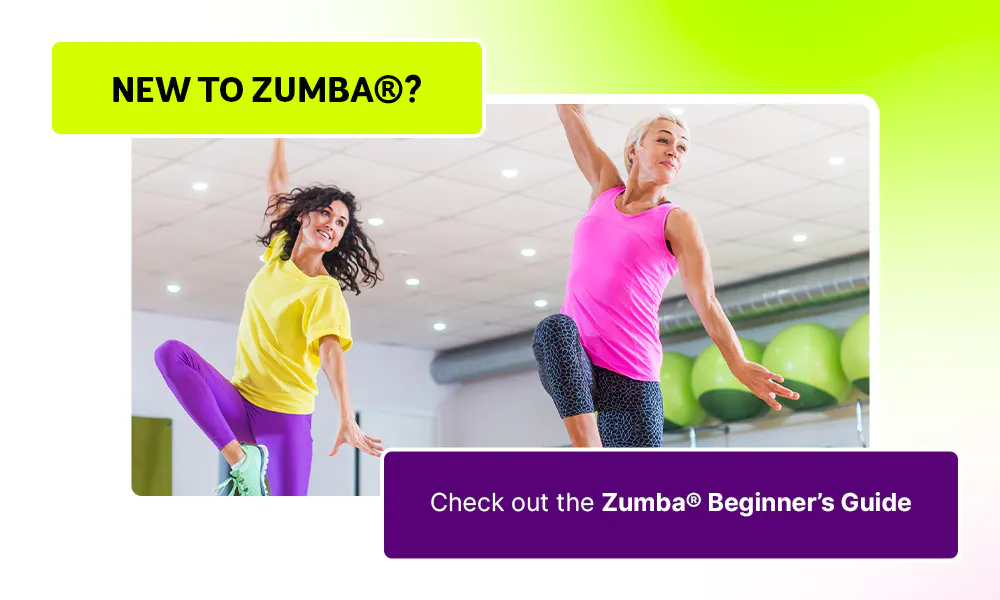
Anyone can walk into a group fitness class and feel at home, no matter their experience, coordination, or fitness level. Instructors expect new faces every session and welcome people at every level. Most classes offer modifications so you can dial the intensity up or down to match where you are that day.
Feeling a little unsure during your first class or two is a normal part of getting started, and that feeling fades fast. A few tips make the transition smoother:
· Arrive a few minutes early to introduce yourself to the instructor.
· Wear comfortable clothing and supportive shoes.
· Bring water and remember to stay hydrated.
· Focus on moving at your own pace rather than keeping up perfectly.
Take a Zumba® class, for example. Even when you miss a step, you're still moving, burning calories, and part of the experience. Our beginner's guide to Zumba® walks you through what a first class looks like, so you know what to expect before you walk in the door.
Where Dance Fitness Fits In
Among all the group fitness formats, dance fitness holds a category of its own — it makes exercise feel almost incidental.
What Makes Dance Fitness Different?
The music and movement set dance fitness apart from other group formats. In most group fitness classes, music provides background energy, but in dance fitness, it's the whole point. Choreography is built around the beat, the instructor cues to the rhythm, and the class feels less like a workout and more like a shared performance. Instead of counting reps or watching a clock, you're moving with the music and the people around you.
The pleasure of this experience translates into numbers. A review found completion rates between 86% and 100% for dance fitness trials, compared to a general dropout rate of around 50% within the first six months of a typical exercise program.
That kind of staying power is part of what makes dance fitness classes such a compelling entry point for anyone new to group workouts.
What Zumba® Brings to the Party
Zumba® is the class that put dance fitness on the map as a global category, essentially the original. Today, more than 15 million people take a Zumba® class across 189 countries. But the numbers only tell part of the story. A typical Zumba® class features:
· High-energy Latin and international music
· Choreography designed so anyone can follow along
· A room that feels more like a dance party than a gym
A typical class burns around 370 calories, delivering a serious cardio workout that doesn't feel like work — participants typically hit about 80% of their maximum heart rate, all while dancing and having fun. Best of all, it's built to be beginner-friendly. Zumba® welcomes beginners just as warmly as experienced dancers. The only expectation is that you move and have fun.
Ready to see it in person? Find a Zumba® class near you and experience the energy for yourself!
Find a Zumba® Group Fitness Class
Group fitness works because it's fun and you're never doing it alone. Zumba® built a brand around that idea. If you love music, movement, and a room full of people rooting for you, find a Zumba® class in your area and see what all the energy is about.
Now that you know what group fitness is, you might feel a different pull. Maybe you're the one who wants to be at the front of the room, leading the playlist instead of just following it. That path is open to you, too. You can achieve a Zumba® Instructor License regardless of your dance background or prior experience. If you're curious about what the role actually looks like day-to-day, this guide to becoming a group fitness instructor breaks it down.
Whichever side of the room calls to you, group fitness is waiting.